FREE (PERI)MENOPAUSE MASTERCLASS
Still not feeling like yourself, even on HRT?
Discover what else could be behind your fatigue, brain fog, pain and mood changes, so you can finally understand why you’re still struggling and what to explore next.
Tuesday, 20 October @ 19:30 CEST / 6:30 pm UK / 1:30 pm EST
a recording will be sent to everyone who registers
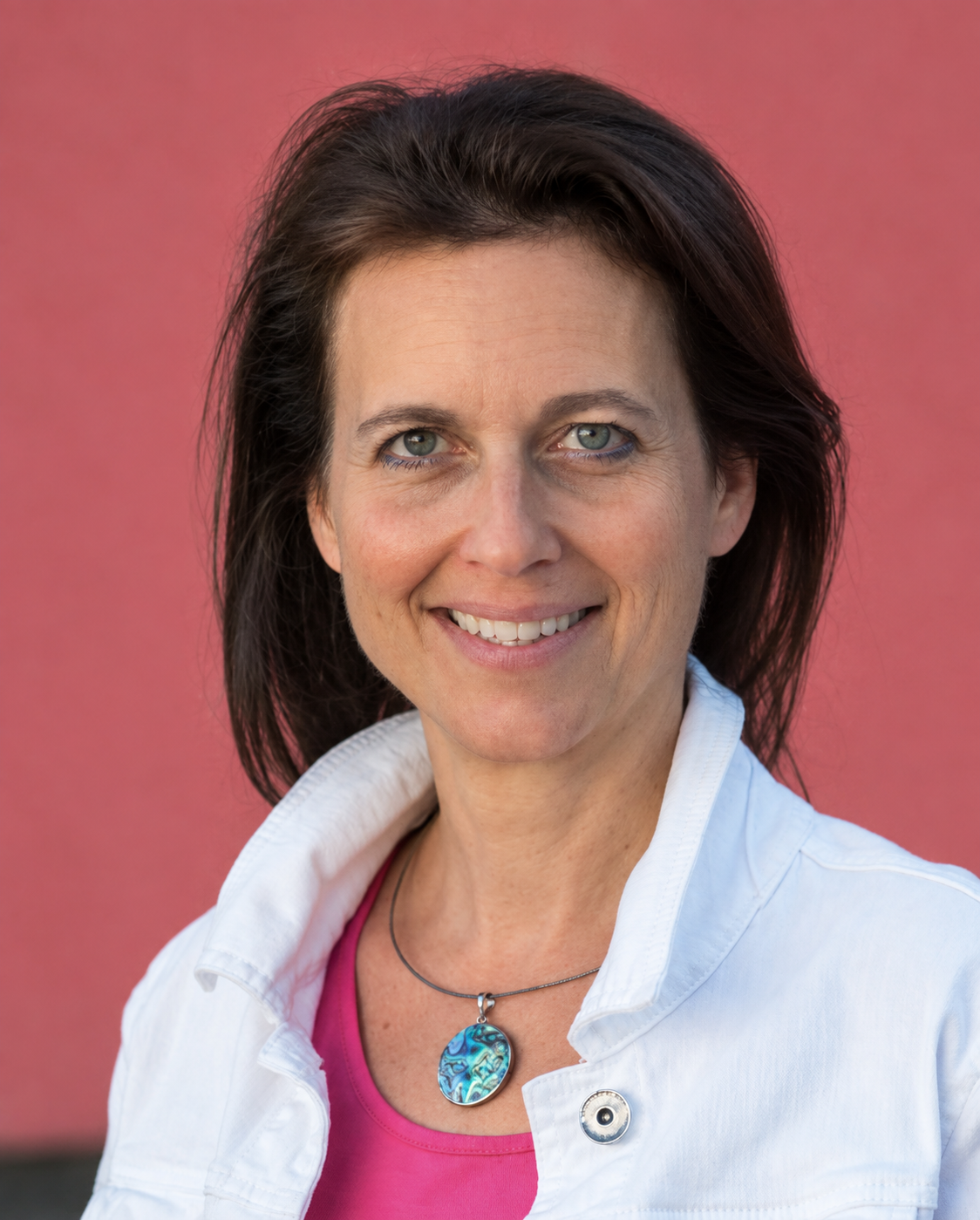
Hosted by: Diana Siepmann
You did what you thought or were told would help.
You started hormone replacement. And maybe it has helped — the hot flushes are better, perhaps you’re sleeping better, maybe you feel more emotionally stable. Maybe you are also paying attention to what you eat, you exercise, you take supplements, but you still don’t feel like yourself.
- Tired when you shouldn’t be tired
- Brain that doesn’t feel as sharp as it used to
- Motivation that’s disappeared somewhere
- More anxious, overwhelmed or emotionally fragile than you recognise
- Weight, digestion, joints, hair or libido changed for no obvious reason
And somehow, the woman who used to cope with everything now feels as though ordinary life takes far too much energy. So naturally you wonder — is my HRT still not right?
Maybe your HRT protocol has been adjusted — once, twice, three times, ….
Maybe you had to “fight” for the adjustments or even change doctors in the hope that — if you only got the dosage, route of delivery, type of product, timing, place of application — right, you would get back to your normal self.
If that didn’t happen, you are not alone.
Maybe it isn’t only your hormones.
When symptoms remain, the conversation so often comes back to more oestrogen, more progesterone, add testosterone. But what if HRT is an important piece of your menopause puzzle — not the only piece?
THE USUAL QUESTION
“Which hormone do I need more of?”
A BETTER QUESTION
“What is driving the symptoms in my body?”
Your hormones don’t operate in isolation.
They’re constantly interacting with the rest of your body — and those systems influence one another. That’s why two women can be at the same stage of menopause, on similar HRT, and have completely different experiences.
Often, we come into perimenopause with a lot already going on beneath the surface. We’ve been coping — until shifting hormones change the balance. Symptoms appear or intensify, and naturally, we blame the hormones.
But what if some of the symptoms are caused by
-
- stress that has put the nervous system under pressure for a long time
- challenges in the gut that can contribute to inflammation, affect nutrient absorption and even cause symptoms far beyond the digestive system
- ongoing immune activation or inflammation keeping the body under physiological stress
- suboptimal thyroid function — often overlooked when thyroid assessment stops at TSH (and sometimes fT4) — contributing to fatigue, brain fog, low mood, weight changes and other symptoms often attributed to (peri)menopause
- the HRT itself (I’ve seen clients who started feeling better when they reduced their estrogen dose – always in agreement with their prescriber)?
In this free masterclass, you’ll discover
Why “I still have symptoms” doesn’t necessarily mean “I need more oestrogen”
Why persistent symptoms on HRT aren’t necessarily evidence your dose is too low — and why continuing to adjust hormones may not resolve symptoms with other drivers.
The key systems I look at when a woman still doesn’t feel well on HRT
The framework I use to look beyond symptoms and explore the interconnected role of your nervous system, gut and immune system, thyroid, and sex hormones.
Why the same symptom can mean very different things in different women
Brain fog, fatigue, anxiety, poor sleep and weight gain don’t each have one cause. You’ll start to see why the pattern behind your symptoms matters more than the label “menopause.”
Why HRT can help enormously — and still not be the whole answer
This isn’t an anti-HRT masterclass. HRT can be transformative and play a valuable role in healthy ageing. But there’s a difference between recognising its benefits and expecting it to correct every reason you might feel unwell in midlife.
How to start asking better questions about your own health
Rather than another generic supplement list, you’ll leave with a framework for thinking differently about your symptoms — and a clearer idea of where your own missing pieces might be.
“But my blood tests are normal…”
Perhaps you’ve had blood tests and been told everything looks fine — and yet you know you don’t feel fine. Or you’ve gone down rabbit holes online trying to work out whether the answer is oestrogen, cortisol, thyroid, iron, gut, glucose, histamine. The more you read, the more confusing it gets. That’s where I want to help you think differently — because your body isn’t a collection of separate systems, and your symptoms aren’t random.
Why I look beyond hormones
I’m Diana Siepmann, a Certified Functional Medicine Consultant with 8+ years of clinical experience.
But long before this became my profession, I knew what it felt like to not feel like myself.
My own hormonal story started as a teenager with debilitating periods and later included fertility struggles, IVF and five miscarriages.
Then, after becoming a mother, my health gradually unravelled.
By 2012, I was exhausted, sleep-deprived, stressed, overweight, in pain and emotionally depleted. My thinking felt cloudy, my patience had disappeared and so had much of my joy.
I remember looking at other women and wondering how they seemed to manage everything when I was barely holding it together.
And I kept telling myself what so many women tell themselves:
Other women manage. Pull yourself together. Keep going.
But deep down, I knew something wasn’t right.
That search for answers eventually led me to functional medicine. Initially, I studied it because I desperately wanted to understand what was happening in my own body.
And slowly, things began to change.
My energy returned. My head became clearer. The pain that had become part of everyday life disappeared. I became more resilient and could enjoy motherhood again.
For a long time, I felt better than I had in years.
Eventually, that journey became my profession.
For years I worked with very diverse and often complex cases — chronic gut and immune issues, autoimmunity, metabolic health, fatigue, mood and cognitive challenges.
That taught me something I still bring to every case today:
Symptoms rarely exist in neat, separate boxes.
And then came perimenopause.
Despite everything I had learned — and despite having felt well for years — I found myself blindsided when some very familiar symptoms began creeping back in.
Fatigue. Brain fog. Anxiety. Pain. Weight changes. That unsettling feeling of not quite being myself again.
I remember thinking:
How can this be happening again?
It sent me deeper into the science of perimenopause, menopause and hormone replacement.
Health isn’t a destination you finally arrive at.
Our biology keeps changing, and sometimes we have to become curious all over again.
I’m still curious about my own health too.
I don’t have a perfectly optimised body or all the answers. But I have learned how to listen differently, how to ask better questions and how to keep looking when the obvious answer doesn’t explain the whole picture.
And because I came to menopause after years of looking at the body through that whole-system lens, when a woman tells me she’s on HRT but still doesn’t feel like herself, my first thought isn’t automatically:
“Maybe she needs more estrogen.”
I want to understand what else might be contributing — and how her hormones are interacting with her nervous system, thyroid, gut and immune system, metabolism and her own unique biology.
Today, alongside supporting women directly, I educate doctors and other healthcare practitioners in functional and genetic testing and personalised health.
I spend a huge amount of my time reading the research, learning from other clinicians and working through complex cases — because my thinking continues to evolve as the science does.
So when I tell you that I understand how frightening and frustrating it can be to feel as though you’ve lost the woman you used to be, I understand it both professionally and personally.
And I also know how powerful it can be when you finally begin to understand why.
What can change when you start connecting the dots?
“Before working with Diana, I had spent five years trying to understand why I was experiencing so many symptoms. I wasn’t sleeping through the night, had severe PMS and low energy — to the point that my social life was on pause for around two weeks every month and I didn’t dare make a career change.
The test results and Diana’s explanation gave me insight into what was going on in my body, my hormones and my genetics. I love to understand things rationally, so this alone gave me a lot of comfort.
Since then, my sleep has improved, my PMS has lessened and my energy is up. It makes me happy to be able to plan more for my future and not dread the second half of every cycle so much.
I also really appreciated that Diana was open to the information and medication I received from my gynaecologist. She worked with it and adapted her recommendations accordingly.
I would highly recommend Diana if you have concerns and feel there may still be connections that haven’t been identified. It feels great to have Diana in my corner, and I wish this for every woman struggling with her health.”
“For decades I struggled with health issues including severe sleep problems, mood swings and depression, extreme fatigue and weight gain. Everything became worse during perimenopause and menopause, until eventually I was completely exhausted, mentally and physically, and ended up in burnout.
My blood tests through my GP always came back within the reference ranges, but I could feel that physiologically something wasn’t right.
After a long search, I found functional medicine and Diana. The testing gave me a much clearer understanding of what was going on in my body, and Diana explained everything in a calm and very clear way.
I started implementing her recommendations and within a relatively short time I felt enormously better. I now have every confidence that I will continue to improve.”
“I had already been prescribed HRT through my GP, including bioidentical hormones, but I still didn’t feel completely right. Some symptoms remained.
With Diana’s help, I’ve been able to dot the i’s and cross the t’s. The DUTCH and DNA tests brought a lot of clarity, and I’ve benefited greatly from her support.”
Is this masterclass for you?
It may be for you if:
- HRT has helped, but you still don’t feel like yourself
- You’ve already adjusted your hormones, but some symptoms simply won’t shift
- You’re wondering whether increasing HRT again is really the answer
- You’ve been told your blood tests are “normal,” yet you know you don’t feel normal (often the case with thyroid labs)
- You’re confused by conflicting menopause advice
- You want insight into a science-based, personalised approach that goes beyond hormones without dismissing them
You don’t need to know anything about functional medicine. You just need to be curious about one question: why do I still not feel like me?
Because what you really want isn’t “perfect hormones”
When I speak to women, what they want back isn’t a perfect oestradiol level. They want their energy back. Their clear head back. Their motivation, their emotional stability, their confidence, their resilience, their libido — their spark back. They want to wake up and recognise themselves again.
That’s what this masterclass is about: not rejecting HRT, not blaming everything on your gut or thyroid instead, and definitely not giving every woman the same protocol. It’s about understanding that your symptoms are information — and learning to look at the whole picture.
Ready to look beyond your hormones?
You don’t need another generic checklist, and you don’t need to become an expert in biochemistry. You need a better map — come and let me show you how I connect the dots.